- THE FIT PICKLER
- Posts
- 4 Habits That Make You Late To & At Kitchen Line
4 Habits That Make You Late To & At Kitchen Line
The Transition Zone, Power Drives, Polymer or Foam?, Ben John's New Serve, Tennis Elbow, Fix Sciatica Pain & More

FIT PICKLER
March 12, 2026

Health, Fitness, News & Fun for Picklers of All Ages
What's Cooking in the Kitchen This Week:
4 Habits That Make You Late To & At Kitchen Line
Are Allergy Pills Quietly Hurting Your Pickleball Game?
DRILL OF THE WEEK: Three & Go Transition Zone
Fitness Expert Glenn Dawson: Top 3 Moves To Fix Your Sciatica Pain Fast
How Do Pros Generate Power on Drives? Len Yang Breaks It Down
Polymer vs Foam-Core Debate Lingers: Is Gen 3 Paddle Technology Already Obsolete?
Zane Navratil On Ben Johns’ New Serve (Video)
How to Prevent Tennis Elbow In Pickleball: Expert Advice from an Orthopedic Surgeon
HUMOR: When You're Too Tired To Move & Someone Says Pickleball
Coach Mary: Top Spin Roll Volleys
🥷SKILLS
4 Habits That Make You Late
To & At The Kitchen Line

Time To Get Up!
Most players don’t think they’re slow at the net.
They think they just missed that one. Or the ball was hit harder. Or their opponent got lucky.
But being late to — and at — the kitchen line is rarely about speed. It’s about habits.
If you feel rushed in hand battles, late on counters, or constantly blocking instead of attacking, one of these patterns is usually the reason.
Habit #1: Admiring Your Shot
You hit a third. Or a drive. Or a drop.
And you watch it.
Even half a second of ball-watching after contact delays your movement forward. That delay compounds. You arrive a step late, slightly upright, slightly unbalanced.
The fix is simple: Hit. Move. Split.
Hit — then start moving forward immediately.
As your opponent begins their swing, give a small split-step so you land just as the ball leaves their paddle.
That timing keeps you balanced and ready instead of scrambling.
Habit #2: Drifting Instead of Stopping
Some players don’t stop at the kitchen line. They drift into it.
💪 Health & Fitness Section
Are Allergy Pills Quietly
Hurting Your Pickleball Game?


That’s Nothing To Sneeze At!
Every spring, the same routine plays out.
Pollen count's up, eyes are itching, and before grabbing the paddle bag you reach for your allergy pill. Makes sense, right? Play without it and you're wiping your nose between every dink rally.
Here's what nobody told you: that pill you're taking to protect your game may actually be blunting the fitness gains you're working so hard to build.
The Chemical You've Been Taught to Fear
Histamine has a bad reputation. We blame it for the sneezing, the watery eyes, the puffy feeling that hits every March. Antihistamines exist specifically to block it—and for years, most of us assumed the more we blocked, the better.
But histamine isn't just an allergy trigger. Your muscles actually release it during exercise, and it plays a real role in your body's adaptation process. When you finish a session at the kitchen line, histamine helps signal increased blood flow to the muscles you just worked. It's part of the mechanism that tells your body to get stronger, more resilient, and more efficient.
🥷 DRILL OF THE WEEK
Three & Go Transition Zone

Easy as 1, 2, 3
Most players think the third shot is the moment that wins the point. In reality, the real battle starts after it, in the stretch between the baseline and the kitchen where rushed feet and impatient swings get exposed.
Watch how the “Three and Go” drill trains players to survive the transition zone and earn the kitchen under control.

🏋️ STAYING FIT with
GLENN & BRIANNA
Top 3 Moves To Fix
Your Sciatica Pain Fast
🥷 SKILLS
How Do Pros Generate
Power On Drives:
Len Yang Breaks It Down

Len Yang sees the same problem over and over on rec courts. Players swing harder and harder on their drives, yet the ball still floats long or dies in the net. The fix, he says, starts before the paddle even moves.
See the stance, paddle path, and hip rotation Yang says separate a wild swing from a controlled, powerful drive.
🗞️ NEWS
Polymer vs Foam-Core:
Is Gen 3 Paddle Technology
Already Obsolete?

Are You Calling Me Old?
Gen 4 foam paddles are being marketed as the next leap in pickleball technology. But as the hype grows, some equipment analysts say the story isn’t nearly that simple, and the long-dominant Gen 3 polymer paddles may not be going anywhere.
See what testers say about foam cores, sweet spots, durability, and why Gen 3 paddles may still hold their ground, click here…
🏓 PRO NEWS

⚕️ HEALTH NEWS
How To Prevent Tennis Elbow In
Pickleball: Expert Advice From
An Orthopedic Surgeon
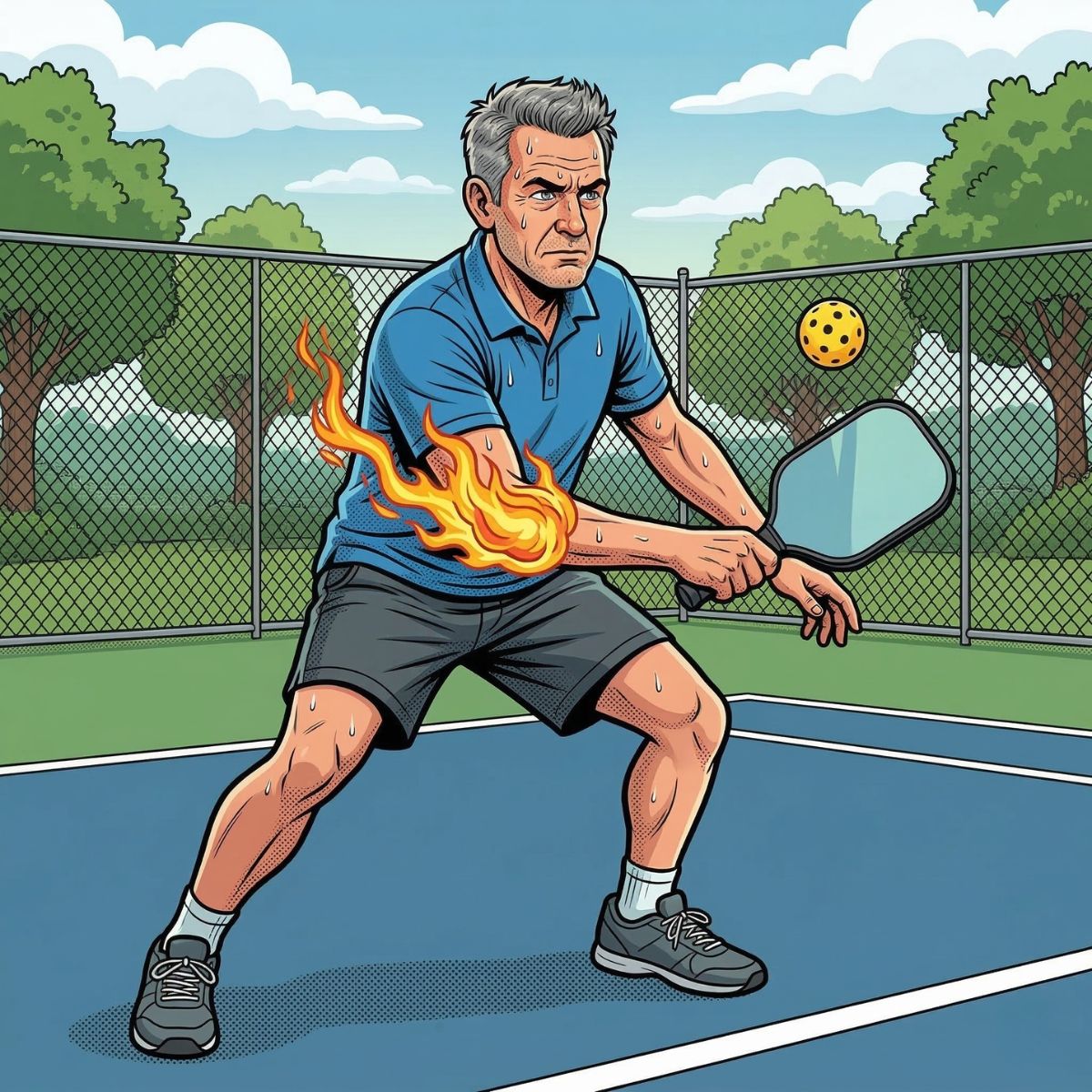
But I Don’t Even Play Tennis!
Dr. Chia Wu, an orthopedic surgeon at Houston Methodist offers solid advice on why pickleballers develop tennis elbow and how to head it off with better warm ups, cleaner technique, and smart strength work.
Be sure to also keep in mind paddle weight and grip size, and managing weekly volume, especially after time off. Check out the advice here…
🏓 HUMOR


🧭 COMMUNITY NEWS
RALLY RUNDOWN:
LOCAL HIGHLIGHTS
HAPMDEN, ME: Beloved Hampden Pickleball Tournament Returns To Support Kids Facing Major Medical Treatment
MEADVILLE, PA: Alumnus Combines His Love of Philosophy & Pickleball Into A Career
PELHAM, AL: Pickleball For All Tournament Raises $12,000 For The Arc Of Shelby County
McKINNEY, TX: Pickleball Boom Continues in North Texas as Texas Open Draws 20000+ Fans to McKinney
ROSEBURG, OR: New Outdoor Tennis And Pickleball Courts Open In Roseburg
PARMA, OH: Parma Doubles Down On Pickleball Courts At Ries Park
KEY LARGO, FL: Pickleball Tournament Supports Students
DO YOU HAVE LOCAL NEWS TO SHARE? REACH OUT TO US AT
[email protected] and send us a link to your story!
HOLDING COURT with
COACH MARY
💪 Top Spin Roll Volleys

Lately, I have noticed that many of my drill class players are improving on dinking, spins, deep returns, and adding new serves to their toolbox. One weakness I have observed, is the ability to attack at the NVZ line.
Check out the attached videos from the Flying Pickleball Academy on volleys, topspin roll volleys, and a great volley drill.
Susannah Barr - when to hit a roll volley, versus a punch volley.
1. Stop hitting balls into the net!
2. If the ball goes lower, you need to roll it. Drop your paddle down to 6 ok-clock.
3. Lay your paddle back, rotate like a windshield wiper, and your paddle should end up high.
4. Partner feeds drop in the air.
5. Create topspin!
6. For the punch volley, this is a ball that is higher!
7. Notice that her opposite shoulder moves back to get the chest involved.
8. Susannah emphasizes that you need to get lower to hit the punch.
9. Check out her ready position!
10. When she finishes her shot, she recovers to a tiny split step to get ready for the return.
The next video demonstrates a great drill for volleying.
· Two feeders, two volleyers.
· Five targets. Call out the colors you are aiming for.
· Take your time, keep breathing, aim for your targets.
· No tush push. It can be a backhand or forehand volley.
· You can do this with a ball machine also.
Incorporate your hips, shoulders, body. No backswing. Using your off arm as a counter, going behind you, will help you with accuracy.